
The investment landscape has evolved dramatically over the past decades. Market-savvy investors now have access to strategies once reserved for institutional players. Factor investing represents one such strategy that bridges passive and active management approaches. Understanding factor investing can transform how you build and manage your portfolio.
What Is Factor Investing?
Factor investing is an investment strategy that selects securities based on measurable characteristics. These characteristics, or factors, have historically generated higher returns than market averages.
Think of factor investing as selecting ingredients for a recipe. Each factor represents a specific ingredient contributing to portfolio performance. By combining the right factors, investors create portfolios tailored to their goals.
The strategy originated from academic research in the 1970s. Today, factor investing has grown into a multi-trillion-dollar industry. According to industry estimates, between $1-2 trillion globally is invested in factor-based strategies. This growth reflects the approach’s proven track record and increasing accessibility.
The Two Main Types of Factors
Factor investing divides into two primary categories: macroeconomic factors and style factors.
Macroeconomic Factors
Macroeconomic factors explain broad risks that exist across asset classes, the factors include:
Economic Growth:
Strong economic growth increases consumer spending, boosts company profits, and pushes stock prices higher, while weak growth reduces profits and drags markets down.
Inflation:
Rising prices reduce consumers’ purchasing power, lower spending, and directly pressure business revenues and profits.
Credit:
Investors demand higher returns when they take higher default risk, while safer credit investments offer lower but more stable returns.
Interest Rates:
Higher interest rates increase borrowing costs and slow spending and investment, while lower rates encourage economic growth and market activity.
Style Factors
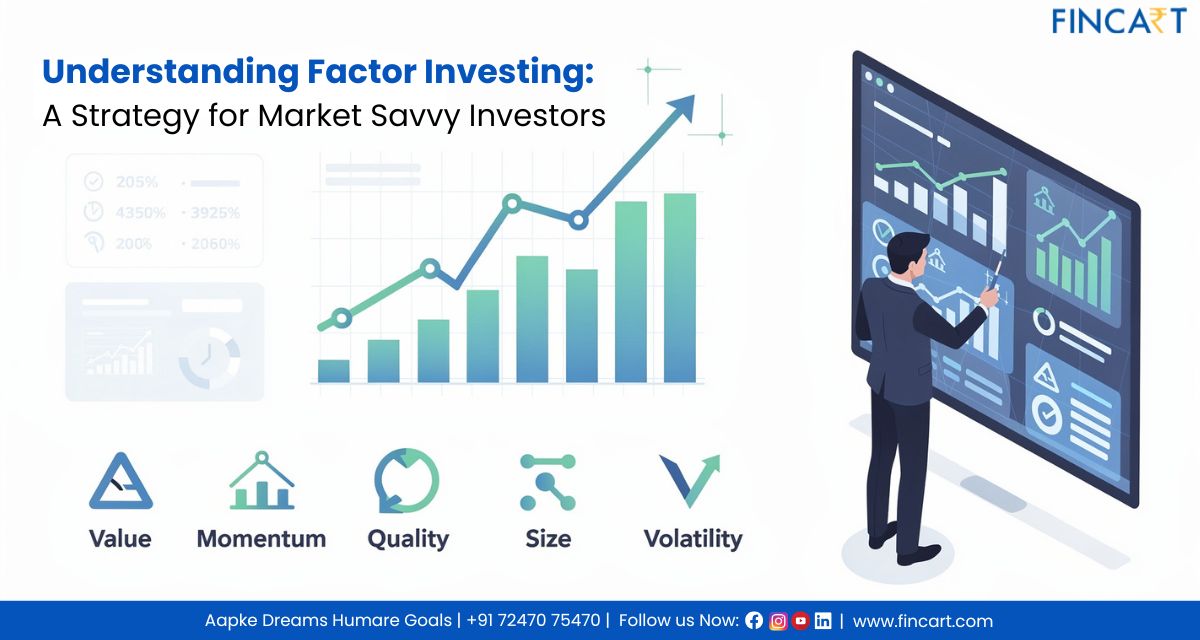
Style factors explain returns and risks within specific asset classes. The most widely recognized style factors include value, momentum, quality, size, and low volatility.
Value Factor
Value investing strategies select undervalued stocks relative to fundamentals. These stocks trade at low prices compared to earnings, book value, or sales.
When companies face temporary challenges, markets often react downward. Value investors purchase these temporarily discounted securities.
Momentum Factor
Momentum factor states that investors invest in stocks that performed well in the recent past (typically over the last 3 months to 1 year) because these stocks often continue to perform well in the near future.
Quality Factor
Quality investing targets financially healthy companies with strong fundamentals. These companies demonstrate:
- High profitability and return on equity
- Strong balance sheets with low debt
- Consistent earnings growth
- Sustainable competitive advantages
Size Factor
The size factor focuses on market capitalization; small- cap stocks offer higher growth potential than large-cap stocks. However, small companies face greater business risks and market fluctuations. Investors must balance potential returns against heightened risk exposure.
Volatility
Multiple empirical studies show that low-volatility stocks outperform high-volatility stocks on a risk-adjusted basis. Researchers call this pattern the low-volatility anomaly and document it in both developed and emerging markets.
Benefits of Factor Investing
Factor investing offers several compelling advantages for portfolio management. Understanding these benefits helps investors evaluate the strategy’s fit for their needs.
Risk-Adjusted Returns
Historical data support factor investing’s effectiveness. Value, momentum, quality, size, and low volatility factors have delivered excess returns over decades. These patterns persist across different markets and time periods.
Improved Diversification
Factor investing diversifies across return drivers. Factors exhibit low correlations with each other. When momentum underperforms, value might excel. This non-correlation reduces portfolio volatility and smooths returns over time.
Transparency
Factor investing follows rules-based, systematic processes. Investors understand exactly what drives their portfolio’s performance, and their systematic nature removes emotional bias from investment decisions. This consistency helps investors avoid behavioral mistakes.
Cost Efficiency
Factor ETFs typically charge lower fees than traditional active funds. While not as inexpensive as pure index funds, they offer value between passive and active costs.
The fee difference matters significantly over long investment horizons. Lower costs mean more returns compound in investors’ favor. This cost advantage enhances factor investing’s appeal.
Customization for Different Goals
Factor investing accommodates diverse investor objectives. Risk-averse investors can emphasize quality and low volatility factors. Growth-seeking investors might focus on momentum and small-cap exposure.
This flexibility makes factor investing suitable for various life stages and goals. An investment consultant can help tailor factor exposures to individual circumstances.
Risks and Limitations
Like all investment strategies, factor investing carries specific risks. Understanding these limitations helps investors make informed decisions.
Factor Crowding
As factor investing grows popular, factor crowding becomes a concern. When too many investors target the same characteristics, expected returns may diminish.
Stocks exhibiting desired factors become expensive as demand increases. This reduces future return potential and may cause sharp reversals when sentiment shifts.
Tracking Error and Underperformance Periods
Factor investing deviates from standard market indices, which creates tracking error. This means factor funds often perform differently from benchmarks like the Nifty or S&P 500. When these strategies underperform during certain market phases, investors feel uncomfortable because their returns don’t match the broader market.
Implementation Challenges
Successful factor investing demands skillful execution. Poor execution can eliminate factor premiums through excessive trading costs. Portfolio turnover increases transaction expenses and tax burdens. Investors often rebalance portfolios frequently, but this practice reduces net returns.
Data Mining Concerns
Critics argue that some factors reflect statistical coincidences rather than genuine economic phenomena. As researchers test countless variables, some patterns emerge by chance.
However, well-established factors like value, momentum, and quality have decades of documented evidence. Their persistence across markets and time periods suggests genuine economic foundations.
Concentration Risk
Emphasizing specific factors may create unintended portfolio concentrations. Size factor strategies might overweight particular sectors or industries.
This concentration exposes investors to sector-specific risks. Diversification within factor exposures helps mitigate this concern.
Working with Professional Advisors
Implementing factor investing effectively often requires professional guidance. An investment consultant brings valuable expertise to the process.
Strategic Planning
Professional advisors help determine appropriate factor allocations for individual circumstances. They assess risk tolerance, time horizons, and financial goals.
This planning ensures factor strategies align with comprehensive financial plans. Advisors integrate factor investing with other portfolio components seamlessly.
Ongoing Monitoring
Investment advisory services provide continuous portfolio oversight. Professionals monitor factor performance, rebalance holdings, and adjust exposures as needed.
This active management prevents portfolio drift and maintains strategic factor allocations. Regular reviews ensure strategies remain aligned with evolving goals.
Education and Communication
Professional advisors educate clients about factor investing principles. Understanding the strategy helps investors stay committed during underperformance periods.
Clear communication builds confidence in factor approaches. Advisors explain performance drivers and set realistic expectations.
Access to Institutional Solutions
Professional investment services often access institutional-quality factor strategies. These solutions may offer advantages over retail products through lower costs or enhanced implementation.
Working with qualified advisors provides access to best-in-class factor investing solutions.
Making Factor Investing Work for You
Successfully incorporating factor investing requires thoughtful planning and execution. Consider these practical steps when implementing factor strategies.
Define Your Investment Objectives
Start by clarifying what you want to achieve. Are you seeking higher returns, lower volatility, or both? Your objectives guide factor selection.
Risk tolerance significantly influences appropriate factor choices. Conservative investors emphasize quality and low volatility. Aggressive investors might focus on momentum and small-cap exposure.
Determine Implementation Approach
Decide whether single-factor or multi-factor strategies suit your needs better. Single factors offer simplicity and concentrated exposure. Multi-factor approaches provide diversification and smoother performance.
Consider whether you’ll manage factor investments independently or seek professional investment advisory services. Complex factor strategies often benefit from expert implementation.
Establish Realistic Expectations
Understand that factor investing doesn’t guarantee outperformance in all periods. All factors experience cyclical underperformance stretches.
Successful factor investing requires patience and long-term commitment. Short-term underperformance shouldn’t trigger strategy abandonment. Historical evidence supports factor effectiveness over full market cycles.
Monitor and Adjust
Regularly review factor portfolio performance and alignment with goals. Market conditions change, and factor allocations may need adjustment.
However, avoid excessive trading or factor timing attempts. Disciplined, systematic approaches typically outperform frequent strategy changes.
Consider Tax Implications
Factor strategies with high turnover may generate significant taxable gains. Understanding tax consequences helps optimize after-tax returns.
Tax-efficient implementation through appropriate account placement enhances factor strategy effectiveness. An investment consultant can provide valuable guidance on tax optimization.
Conclusion
Factor investing represents a powerful approach bridging passive and active management strategies. By systematically targeting proven return drivers, investors potentially enhance portfolio outcomes.
The strategy’s foundations rest on decades of rigorous academic research. Value, momentum, quality, size, and low volatility factors demonstrate persistent return generation. This empirical support provides confidence in factor investing principles.
Professional guidance enhances factor investing success. An investment consultant helps navigate implementation complexities, optimize factor allocations, and maintain strategic discipline.
Why choose Fincart for factor investing?
At FinCart, our expert team will guide you on how factor investing fits within holistic financial planning frameworks. We help clients implement factor approaches aligned with their unique goals and circumstances.
Whether you’re building wealth, planning retirement, or managing existing portfolios, factor investing deserves consideration. The strategy’s systematic approach, empirical support, and flexibility make it suitable for various investor types.
Ready to explore how factor investing might enhance your portfolio? Connect with FinCart’s investment advisory services team. We’ll help you understand factor strategies’ potential role in achieving your financial objectives.
FAQs’
What is factor-based investing?
Factor-based investing is an investment strategy that selects stocks based on specific characteristics such as value, momentum, quality, size, or low volatility. These factors have historically delivered higher risk-adjusted returns over long periods using rules-based, systematic methods.
Factor investing vs value investing.
Value investing focuses only on undervalued stocks using fundamental metrics like price-to-earnings ratios. Factor investing is broader and includes multiple factors such as momentum, quality, size, and low volatility. Value investing is one component of factor investing.
Does factor investing work?
Yes, factor investing works over long investment horizons. Academic research and market data show that factors like value, momentum, and quality generate excess returns across markets. However, factor strategies can underperform temporarily, requiring long-term discipline.
What is factor investing in mutual funds?
Factor investing in mutual funds means the fund follows a rules-based approach to select stocks using specific factors. These funds reduce reliance on fund manager discretion and instead use systematic models to capture long-term factor premiums.
What is factor investing in stocks?
Factor investing in stocks involves selecting individual shares based on measurable characteristics such as strong fundamentals, recent price momentum, or low volatility. Investors use data-driven criteria instead of emotions or market trends to build portfolios.
What are the 5 main factors in factor investing?
The five main factors in factor investing are value, momentum, quality, size, and low volatility. Each factor captures a different source of return or risk behavior. Combining multiple factors helps improve portfolio diversification and consistency.